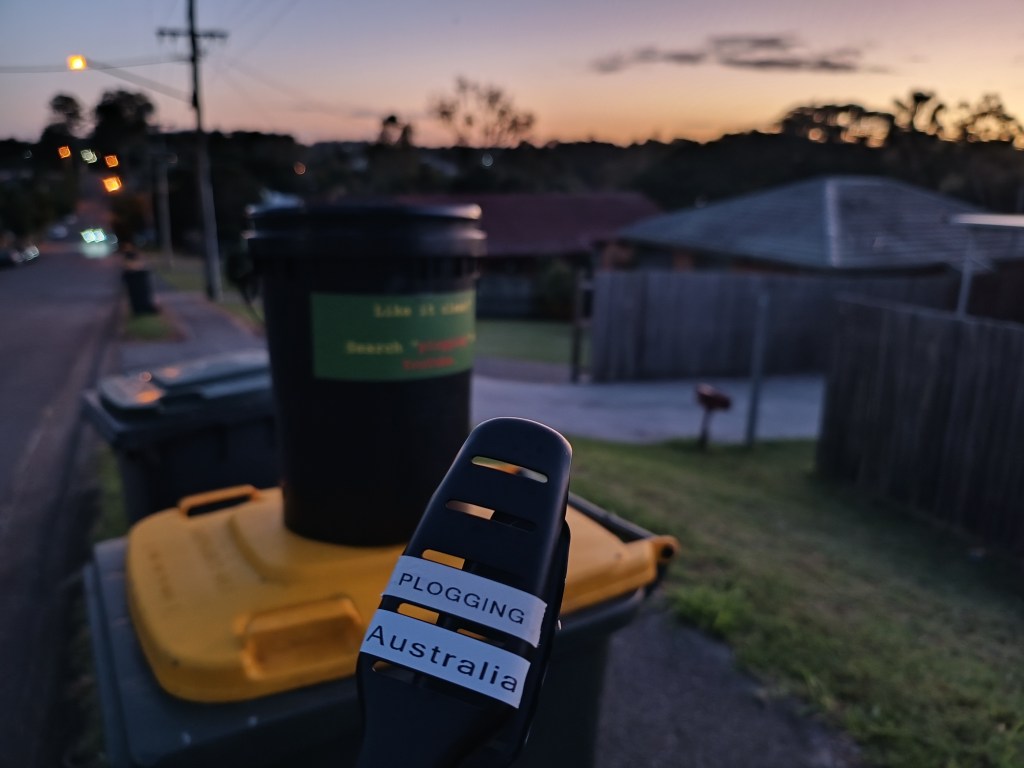
This morning was my first plog since coming back to Australia. I walked the route I’d jogged yesterday and collected three 20L buckets full of rubbish (mostly plastics). It was hard not to compare Australia’s trashiness to New Zealand’s pristineness.
The hardest bit was that I had to leave a lot of rubbish because I just couldn’t find space for it; whereas, everywhere I plogged in New Zealand was left completely trash free.
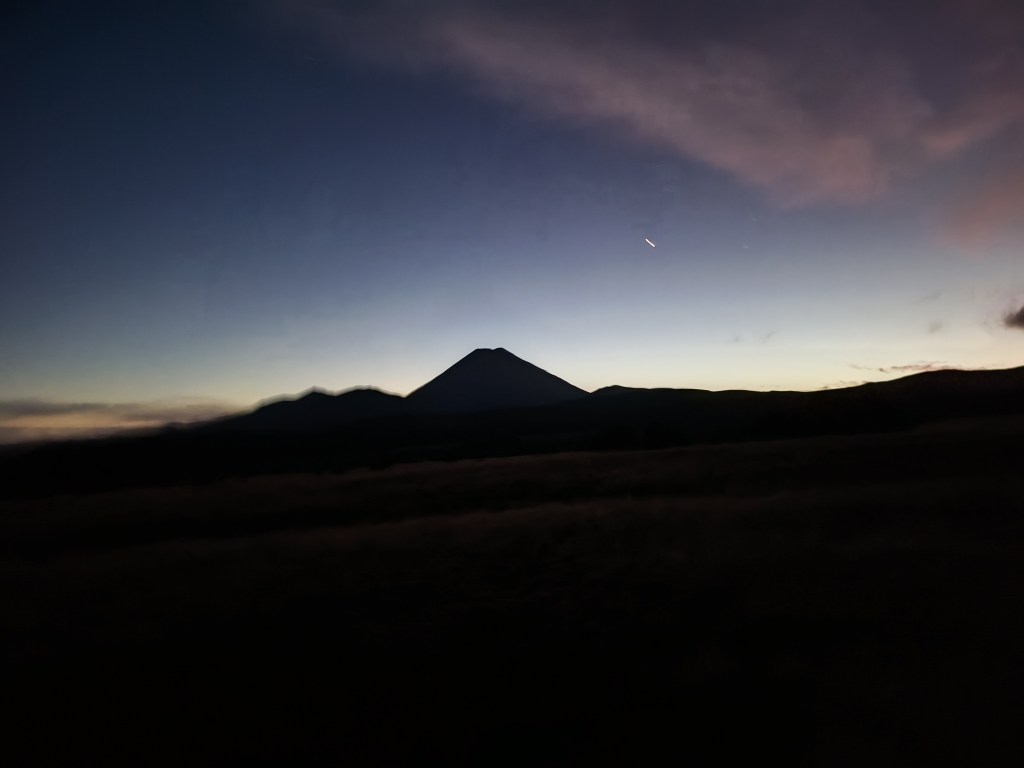
Here in New Zealand, I feel like my plogging is making a sustainable difference. Even in the urban areas, it seems that I’m collecting litter faster than it’s being littered. Along the walking trails, this is even more so. I recently plogged trails around Whakapapa and only found a handful of rubbish.
It’s harder to feel this way in Australia. Plog an urban area one day and you’ll be able to fill a couple of buckets the next day. Even hiking trails are often so littered that it’s untenable for a solo plogger to keep them clean. I’m having to travel further and further from Aussie’s civilisation to regain that feeling that I’m making a sustainable difference when I plog.
I suspect that this is due to increasing population density. If there’s only one person littering in a square kilometre, then one person can compensate. Once the density goes up, so does the number of people littering.
Research backs this up. Studies have shown a strong link between population density and littering rates. One paper published in the Journal of Environmental Psychology found that areas with higher foot traffic tend to have more litter, not only because of the volume of people but because visible litter triggers more littering behaviour. It’s a feedback loop. Psychologists call it “social norm theory”: if people see rubbish, they unconsciously feel permission to add to it.
This puts ploggers in a peculiar position. We’re not just removing litter; we’re trying to reset the norms. A visibly clean trail subtly says, “This is cared for. Respect it.” But that quiet message gets drowned out when the scale becomes too large. It’s like trying to mop the floor while the tap is still running.
That’s why feeling like you’re making a sustainable difference matters. It creates what I think of as plogging agency: that sense of individual effectiveness that fuels the will to keep going. Without it, the work can start to feel like a symbolic gesture rather than a transformative one. That’s how I feel when I’m plogging Australian urban areas.
In New Zealand, I still have that sense of agency. It’s not just the lower population; it’s the public mindset. There’s a cultural pride in keeping the environment pristine, something that’s woven into the national identity. Litter still appears, but there’s a shared expectation that it shouldn’t. In contrast, many Australian urban environments have become places where litter is tolerated, even expected.
The good news? Agency can be built. Community clean-ups, council support, signage, bins, and (most importantly) visibility. When people see someone picking up rubbish, it challenges the passive norm and creates a new active one. One plogger can start a ripple. Enough ripples become a current. Rubbish Club Australia is creating a current!
And sometimes, that’s all we need, a little push, perhaps a little company, to believe that our small actions aren’t futile.
I bummed a ride this morning from Palmerston North (in the North Island of New Zealand) to the little city of Taupo, which sits on the rim of a giant volcano crater. While it’s currently dormant, scientists keep a close eye on it because of its supervolcano status.
Lake Taupo is one of the largest and most active supervolcanos on the planet, not by surface area but by explosive power.
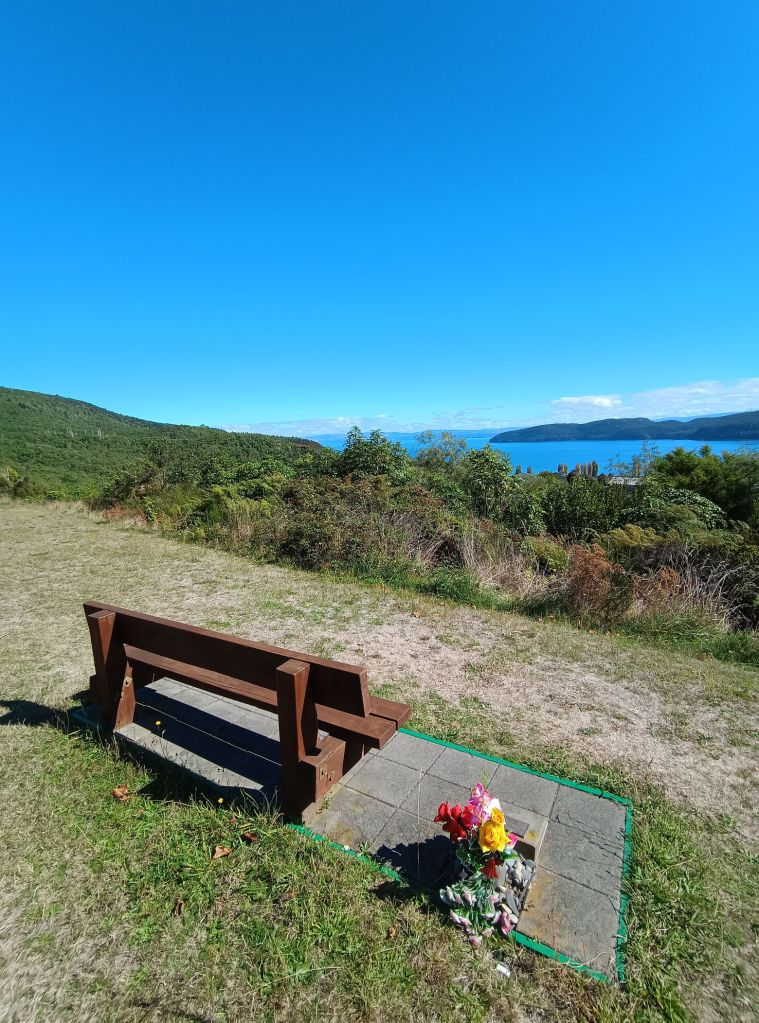
The city of Taupo was nauseatingly busy today due to a car race happening this weekend, so I escaped to plog a little park overlooking the town of Kinloch.
The flowers were left to remember the local resident recognised on the plaque near the seat: Yvonne Maureen Pitt.
The comedian John Cleese took some deathly piss out of Palmerston North many years ago, so another comedian Fred Dagg named a huge pile of local litter after John. It’s now a recycling station, topped with green waste compost.
Maybe I could be buried there after I “take my terminal breath”?!
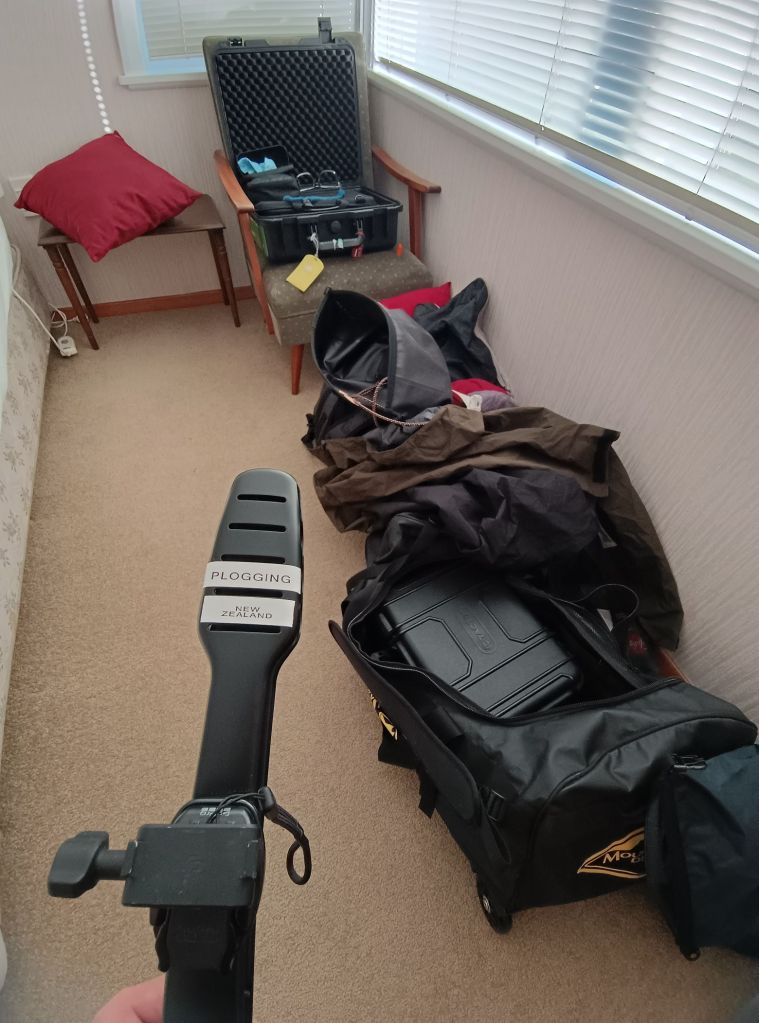
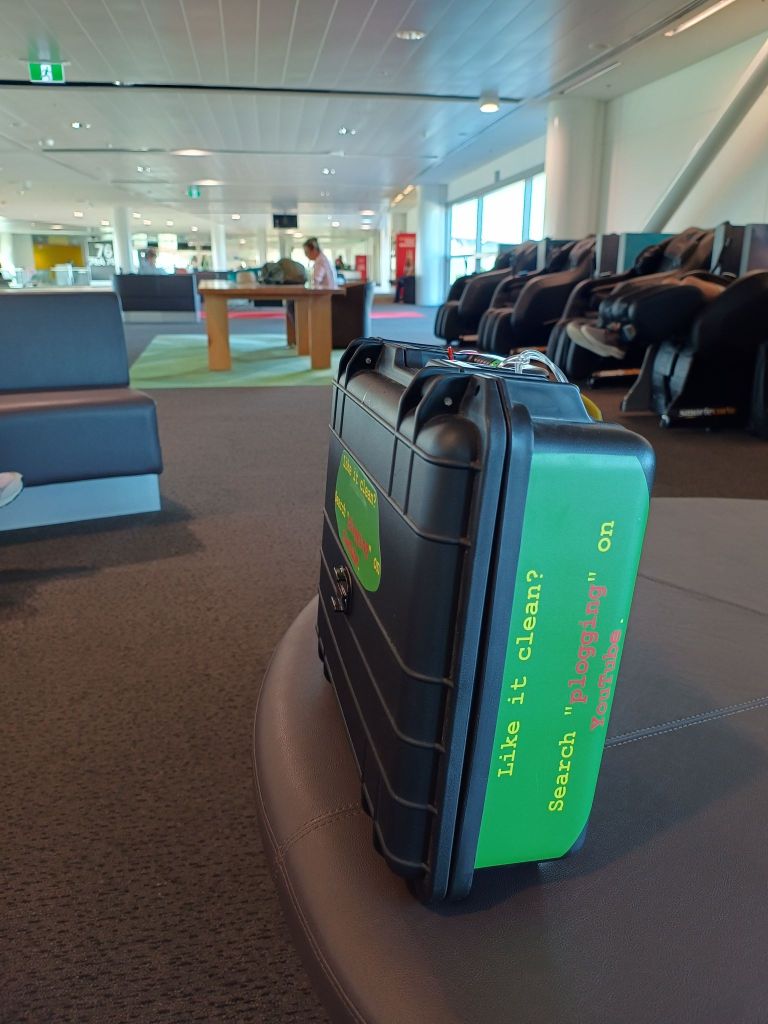
Mystery solved: My bag wasn’t lost. New Zealand biosecurity officers were stumped by my padlock and couldn’t check out something dubious inside.
It wasn’t my new plogging tongs (deliberately brought to avoid biosecurity concerns); it was my wife’s hand cream, because it looked like a jar of honey 🤣.
I’m now ready to start plogging Aotearoa at dawn tomorrow.
These metal plogging tongs replace my usual bamboo tongs, to avoid biosecurity problems!
Capturing the plogvlog.com URL came with a convenient blogging platform and the question “What to do with this opportunity?”.
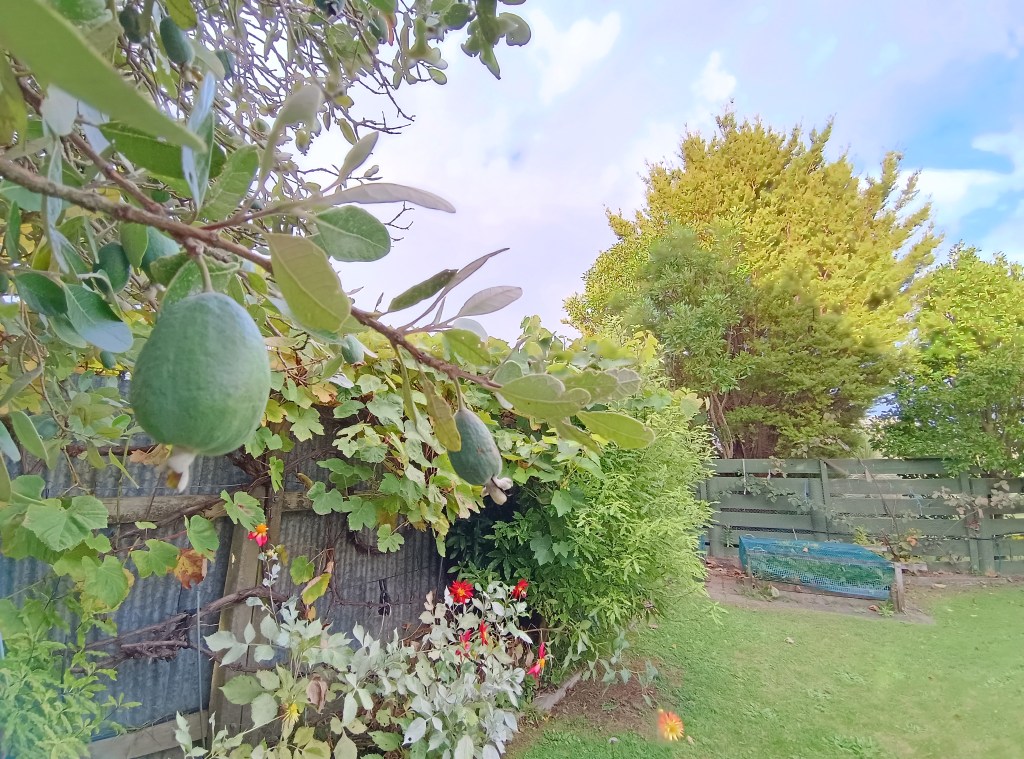
Feijoas growing at where I’m staying – No luggage but no lack of free food!
Plog Vlog is about plogging beautiful places, with the places being the protagonists of the vlogs. Plog Vlog isn’t a travel vlog, so it doesn’t tell the story of getting to the plogging locations. This blog could tell those stories.
I’m writing this in Palmerston North, New Zealand, after trip involving a cancelled flight and lost luggage. I’d planned to film plogging around Mt Cleese this morning, but my plogging tongs and camera mounts are in that lost bag. So, instead, I’m sitting at a table typing this in my one set of clothes tasting my unbrushed teeth. I’ve got my cameras and not much else; cameras aren’t much use for maintaining personal hygiene.
Getting to New Zealand from Australia was uneventful, but both the transport south and my bag have gone AWOL. Let’s hope that the bag shows up before my next opportunity to head to Palmerston North (502km away).
At least I have my cameras, so I can still film plogging.
There are some obstacles to hurdle before I can ‘get exploring’.

 Plog Vlog